
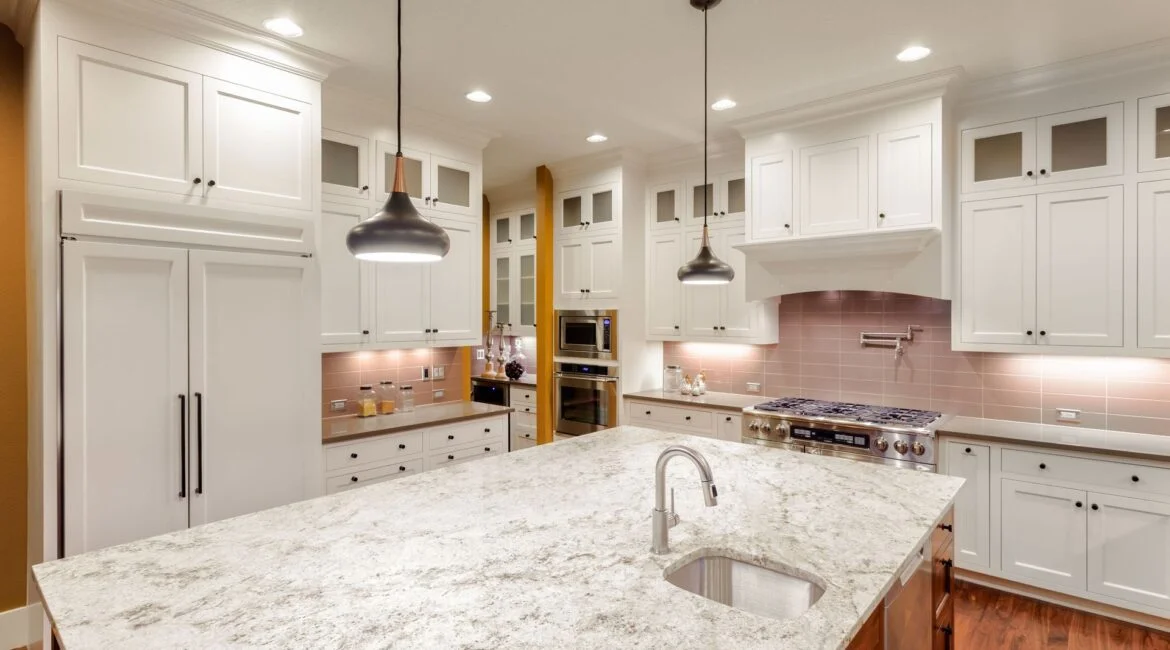
Choosing a natural stone slab is about more than finding an attractive color for your kitchen or bathroom. The veining across a surface can completely change how the finished space looks, feels, and functions visually. While every slab has its own character, certain veining patterns can create especially distinctive design effects. Understanding these patterns can make slab hunting easier and help you select a surface that complements the rest of your room.
1. Follow Bold Linear Veining
Bold linear veins create a dramatic appearance by moving across the slab in strong, noticeable lines. When selecting marble counters, homeowners often appreciate this pattern because it can become an immediate focal point. Long veins can draw the eye across an island, countertop, or vanity while making the surface appear more expansive. Depending on their direction, these lines can also emphasize the length or width of a particular installation. Dark veins against a lighter background tend to provide especially strong contrast without requiring additional decorative elements. A linear pattern can work beautifully in contemporary spaces where clean architectural details are already prominent. It may also complement traditional kitchens when the surrounding cabinetry uses simple profiles and understated hardware. Before choosing a slab, examine how those long lines could appear once the material is cut into individual countertop pieces.
2. Explore Soft Wispy Veining
Soft wispy veining offers a quieter alternative for homeowners who prefer subtle movement across their surfaces. Instead of dominating the slab, these delicate lines gently drift through the stone and create visual texture. This style can make marble counters feel sophisticated without overwhelming cabinetry, backsplashes, flooring, or other decorative features. Wispy veins are particularly appealing when you want the natural stone to provide interest while keeping the overall room calm. Their understated appearance can also make it easier to coordinate the surface with several different colors and finishes. Look closely at the slab from different distances because subtle patterns can become more noticeable as natural light changes throughout the day. You should also consider whether the veins remain attractive when viewed from both standing height and closer angles. Selecting a softly patterned slab can create an elegant foundation for a design that emphasizes balance rather than contrast.
3. Compare Dramatic Branching Veins
Branching veins resemble the limbs of a tree, spreading from one area into smaller paths across the stone. This distinctive formation can introduce an organic quality that makes a countertop feel connected to natural surroundings. For homeowners searching for marble counters with personality, branching patterns can provide an artistic appearance without using manufactured graphics. The individual branches may vary considerably in thickness, direction, and color, giving each slab a distinctive composition. Strong branching can work particularly well on large islands where there is enough surface area for the pattern to remain visible. However, smaller countertops may require careful planning so that important sections of the pattern are not lost during fabrication. Ask your fabricator to review potential cuts with you so you understand which parts of the veining will remain visible after installation. Taking this step helps you appreciate the slab as a complete design rather than simply judging a small sample.
4. Look for Sweeping Vein Movement
Sweeping veins curve gradually across the surface and can give a slab a sense of motion. Instead of following straight paths, these lines may bend, flow, or arc through several areas of the stone. The result can resemble waves, flowing fabric, or naturally formed landscapes depending on the colors involved. Sweeping movement is especially useful when you want marble counters to soften a room filled with straight cabinetry and angular architectural features. A large island can showcase this pattern particularly well because its broad surface gives the veins room to develop visually. Pay attention to the direction of the movement and determine whether it supports the shape of your countertop. Fabricators can sometimes position slabs strategically so the most attractive portions become prominent features in the finished installation. When the natural flow is carefully considered, sweeping veining can turn an ordinary surface into a major design element.
5. Examine High-Contrast Vein Patterns
High-contrast veins stand out because their colors differ noticeably from the background of the slab. White stone with charcoal veins is one familiar example, but many natural stones combine cream, gray, beige, brown, or other shades in striking ways. This type of pattern can establish a strong visual anchor without requiring elaborate accessories or decorations. In a kitchen, marble counters featuring pronounced contrast can complement darker cabinets, metallic fixtures, or simple neutral walls. The key is to consider the entire room rather than choosing a slab based only on its appearance inside a showroom. Bring cabinet, flooring, paint, or hardware samples when possible so you can compare the relationships between colors. Strong contrast may be ideal for a statement island but could feel excessive if every surface in the room already has a busy pattern. Finding the right balance allows dramatic veining to remain memorable while supporting the overall design.
6. Study Fine Network Veining
Fine network veining consists of numerous small lines that intersect, overlap, and create a delicate web across the stone. Unlike a slab with only a few dominant veins, this pattern provides consistent movement throughout a larger area. It can be an excellent choice when you want natural variation without having one particular line control the entire composition. According to This Old House, marble countertops should be sealed about once a year to help preserve their resistance to staining and etching. That maintenance consideration is worth remembering when evaluating both the appearance and long-term care of your selected material. Network patterns can disguise minor visual variations because the eye naturally moves between multiple lines rather than focusing on one location. They can also pair well with understated cabinetry because the stone itself supplies enough texture to keep the room visually interesting. Before committing to a slab, inspect its pattern under different lighting conditions to make sure the amount of movement matches your expectations.
7. Consider Bookmatched Vein Continuation
Bookmatching creates a mirrored effect by placing two slabs or slab sections beside each other so their patterns appear to continue outward from a central point. This technique can make dramatic natural veining look almost symmetrical while emphasizing the individuality of the stone. It is often considered for large islands, waterfall edges, feature walls, and other installations where the surface receives substantial visual attention. Homeowners considering marble counters may find bookmatching especially appealing when they want the material to serve as artwork within the room. The effect depends heavily on selecting slabs with compatible patterns, so the original slabs should be reviewed together whenever possible. Fabrication also requires careful planning because cuts must preserve the intended relationship between the two sides. Even slight changes in positioning can affect how the veins meet, making communication with the fabricator an important part of the process. When successfully executed, bookmatched veining can create a memorable centerpiece that gives the room a custom and highly intentional appearance.
The most attractive veining pattern is not necessarily the one with the boldest appearance. Instead, the right selection should work with the room’s size, lighting, cabinetry, flooring, and overall design direction. Consider whether you want the stone to blend quietly into the space or become the primary visual feature. Samples can help, but viewing a full slab is usually more useful because natural patterns can change significantly across a larger surface. Pay attention to how veins move through corners, edges, cutouts, and other areas that will affect the finished appearance. You should also think about maintenance requirements, especially when selecting a natural material for frequently used surfaces. A knowledgeable fabricator can help identify areas where distinctive veining can be preserved during cutting and installation. Taking time during slab selection can make the final result feel more cohesive and intentional.
Remember that natural stone is inherently variable, so no two pieces will look exactly alike. This individuality is part of what makes selecting natural surfaces an engaging part of a remodeling project. At Stone Pros Marble, Granite, & Quartz Countertops, LLC, homeowners can explore stone options with the goal of finding a surface suited to their specific project. Contact us today to explore available slabs and find a distinctive stone surface that brings your design vision to life.